
📝 Team Soba: Learning the Art of Noodles in Sapporo
A Map Drawn in Flour: Soba vs. Udon
The first thing that Taku-san, our soba instructor, taught us after we donned our aprons and washed our hands, was about the soba/udon line. He spread some fine flour on the table and with his finger drew an outline of the Japanese archipelago. He then slashed a diagonal line through it, crossing near Tokyo and dividing the country into two. This, he said, very seriously, is the line that separates those who love soba and those who love udon.
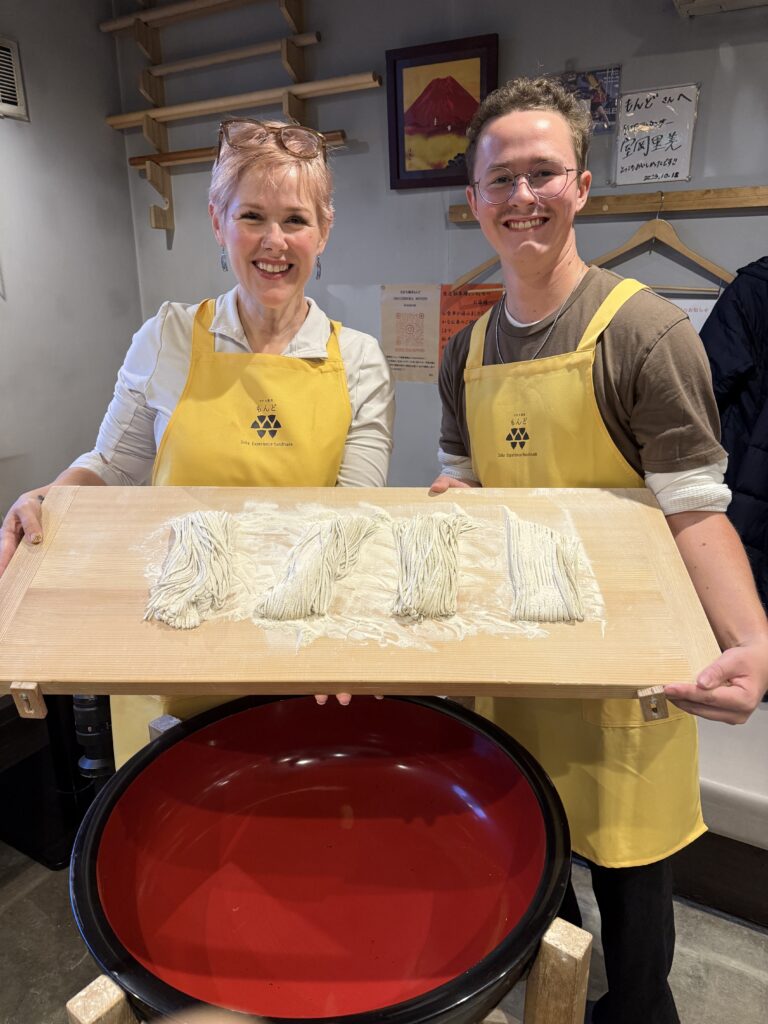
We were in a small basement restaurant that sat fewer than 20 people, and we had it all to ourselves. My son, Mac, and I were in Sapporo kicking off our two week Japan trip, and one of our first planned activities was learning to make soba.
Buckwheat and the Taste of Northern Japan
Soba are long thin noodles made primarily from buckwheat flour, and Hokkaido (which is decidedly in the pro-soba section of Taku-san’s map) is the largest producer of buckwheat in Japan, with more than 40% of the nation’s total harvest. Hokkaido’s climate, soil, and water all contribute to the ideal buckwheat growing conditions. Its climate is cool with low humidity, and the temperature fluctuations between day and night are dramatic. Its soil is rich in minerals thanks to the volcanic activity in the area, and cold spring water in Hokkaido is fresh and clean. All of this together make for intensely sweet and flavorful noodles.
There are, of course, many variations on soba noodles, starting with how much wheat flour is mixed in. Buckwheat is gluten free, which means it lacks that critical agent that binds the dough together, so wheat flour is mixed in to help make the dough softer and more pliable. It is possible to find 100% buckwheat noodles — they are called juwari soba, and they highly prized, with the purest buckwheat flavor and aroma. They are also a little crumbly.
The most common mixture in Japan is called nihachi (two eight) soba which has 20% wheat flour mixed in, and that’s what we learned on.
Hands in Dough: Patience, Texture, Technique
A large red lacquer bowl, called a konebachi, sat on a stand just lower than waist high in the middle of the restaurant. And by large, I mean bigger than anything you could fit into your kitchen cabinets. Taku-san poured the flour into the bowl and demonstrated the mixing technique. With fingers slightly rounded but stiff, we ran our hands in alternating circles moving the dry flour around the bowl.
“Keep mixing!” Taku-san said, his eyebrows furrowed.
He watched us for a little bit then began pouring in a little bit of water.
“Keep mixing!” he prodded. “Keep mixing!”
We giggled nervously focusing on the dough forming in the bowl while making sure our hands didn’t hit each other’s, like cyclists in a carnival’s Globe of Death.
“Keep mixing! Keep mixing!”
Taku-san switched to a spray bottle to adjust the moisture with finer precision.
“Keep mixing!” he said now punctuating the commands with sprays from the bottle.
“Keep mixing!” <squirt>
“Keep mixing!” <squirt>
The dough got increasingly sticky and started clumping together.
“Keep mixing!” He stopped, spray bottle poised, but he didn’t pull the trigger.
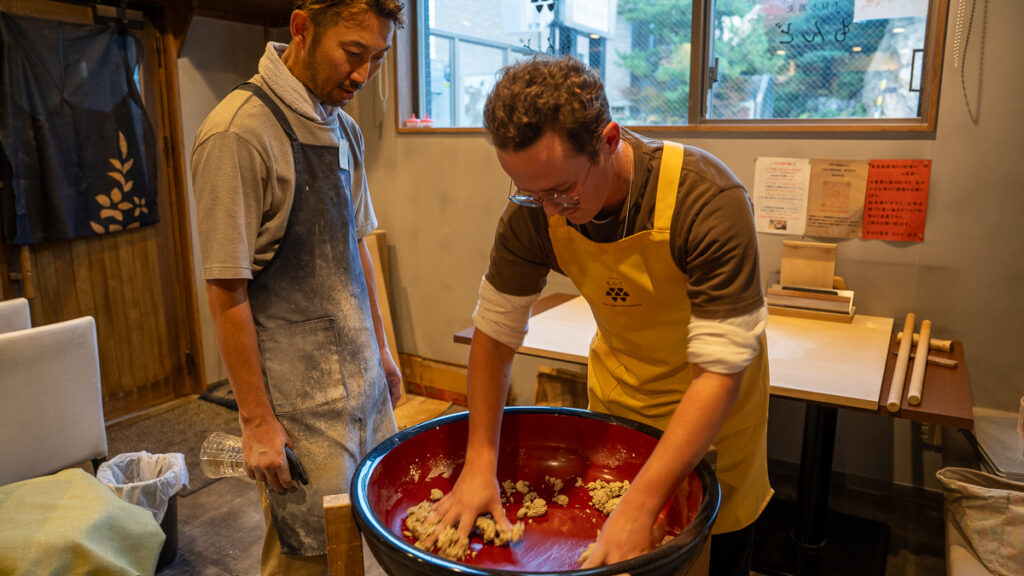
At last he was satisfied with the texture and his shoulders dropped. He put the spray bottle away and we then took turns gently kneading the dough to make sure it was smooth and fully combined.
We then moved to a large table with a almost meter-long rolling pin. Taku-san got the dough into position and then showed us what to do. This is not at all like rolling sugar cookie dough. In fact, after learning how to be gentle with this soba dough, I feel like I maybe owe an apology to all the sugar cookies I’ve ever made.
“You must be gentle,” Taku-san explained, peace had returned to his face as he guided us through the slow and fluid movements. To advance the pin across the dough, you move your palms very lightly in circles over the rolling pin. Think: wax on, wax off. Circles moving out to push the pin away from you, while circles moving inwards bring it back. It requires restraint and patience, but sure enough, the dough stretches and expands, without getting too tough, eventually reaching the desired thickness, about 1/8 inch thick. Taku-san then took the dough and made a letter fold, like you would for a puff pastry, moving one-third of the dough towards the center, then fold the remaining third over the first fold.
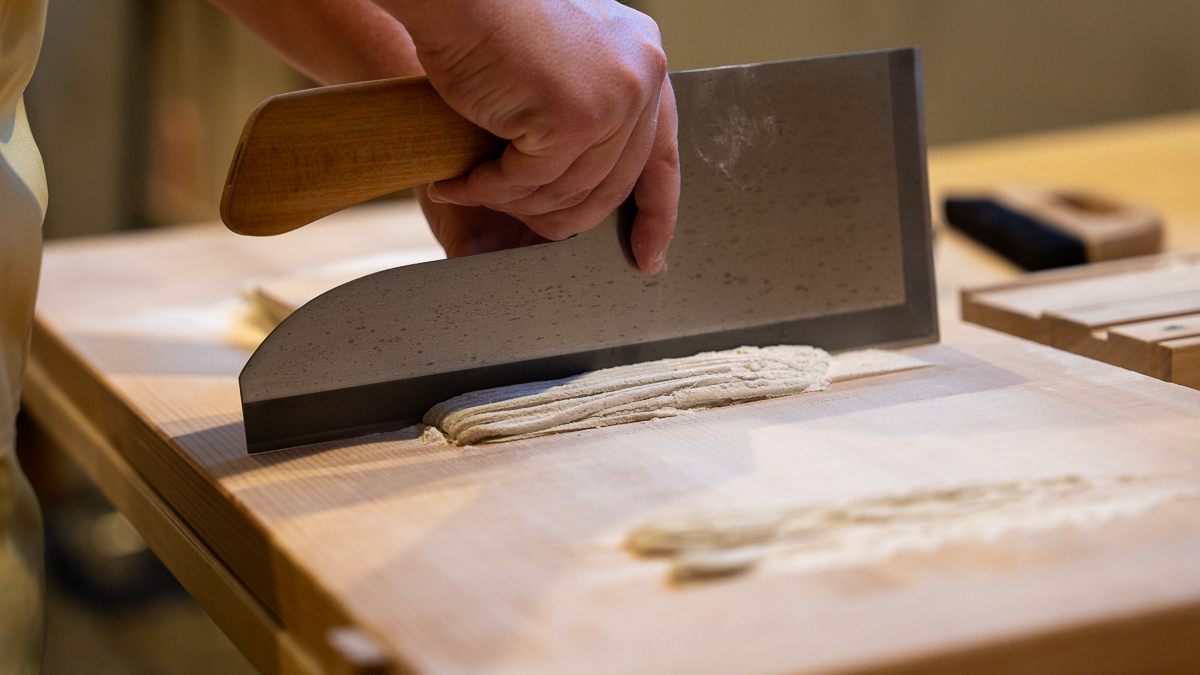
Next, he pulled out a knife that would make Crocodile Dundee blush. A sobakiri knife is long (10-13 inches), squared off, and heavy, and its thin straight blade is designed to make precise and clean cuts through the dough. You guide the blade through the dough then very slightly tilt it to the side to separate what you just cut from the larger dough mass. You then pick up the blade, move it into position for the next bit of noodles and repeat. Take care to keep the large knife away from your body, Taku-san warned us. It’s not hard to let it get too close to you and accidentally nick the top of your thighs.
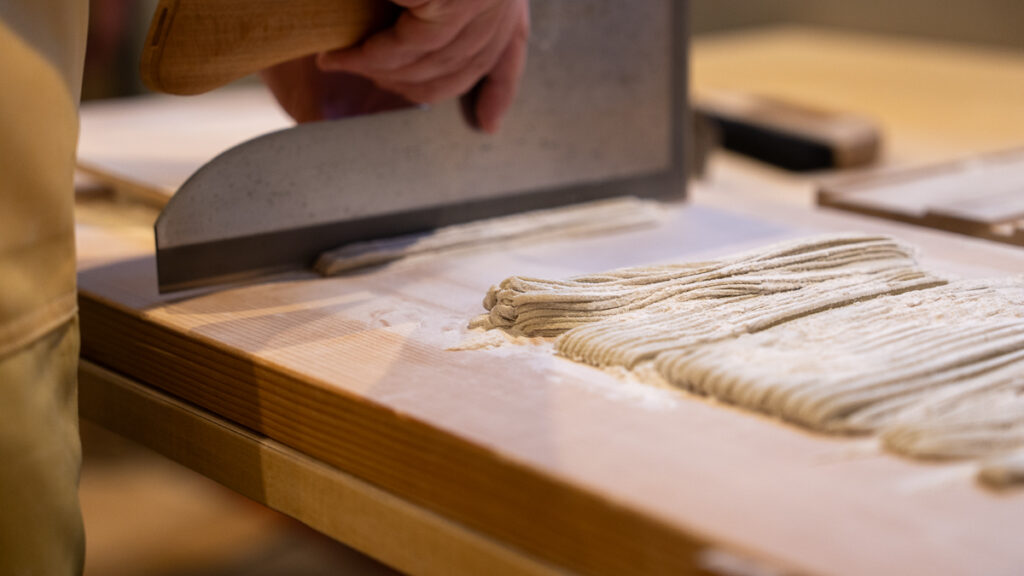
Mac and I took turns cutting the noodles, then we laid out our creations to admire. We then washed up and enjoyed a cold Yebisu beer while Taku-san and his wife prepared the noodles.
Slurping the Landscape: Soba Served Two Ways
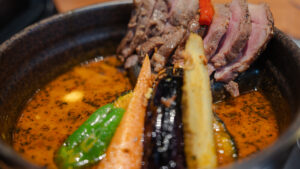
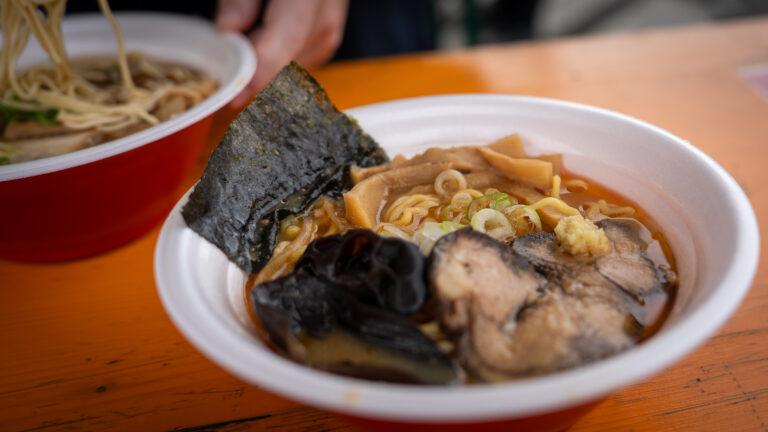
Soba can be served either hot or cold and we got to sample both ways. For the hot noodles, we ate them with shabu-shabu style sika deer meat, which was sliced paper thin and had a wild, earthy, but not at all pungent, flavor. I’d never had cold soba noodles, so I was eager to try them. They were delicious, slippery, and refreshing — something I don’t normally associate with noodles. You can dip them in a rich sauce called tsuyu, which is full of umami, and that is how I gobbled them up.
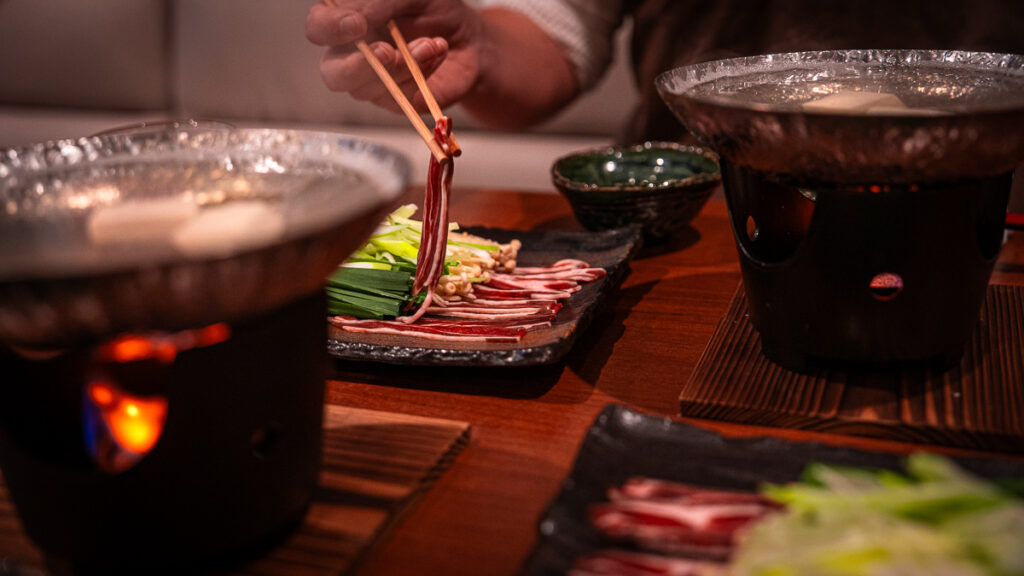
No matter how you like them, you should eat them often; It turns out soba is quite the superfood. Buckwheat is one of the rare plants that has all nine essential amino acids, making it a source of complete protein. It has a decent amount of fiber, and brag worthy amounts of minerals and vitamins. It also has more antioxidant plant compounds that most other grains or cereals, including rutin, which is thought to lower blood pressure, improve inflammation, and maybe even lower cancer risks. Buckwheat also has a very low glycemic index, so it won’t cause blood-sugar spikes.
At the end of the meal, Taku-san’s wife brought us a little red teapot-type pitcher and cup. This, she explained, is sobayu, the water that the noodles were cooked in, and it is customary to drink it at the end of the meal. Now, I’m game to try anything, but I did not think I would enjoy drinking what amounts to pasta water. But, it was surprisingly good and that water is known to carry a lot of the nutritional benefits of the buckwheat. It was a comforting finish, like a hug in a cup.
With all of these health benefits, the delicious dinner, and the sense of accomplishment from learning something new, we were feeling pretty satisfied with ourselves after our meal. I know I can find soba in Japanese restaurants in any major American city, but I’m not sure when I’ll be able to enjoy it like that again. Sure, I could find some buckwheat flour (though not a fresh and high quality as what is available in Hokkaido) and a large bowl, but without the knife and Taku-san’s “Keep mixing” admonitions/encouragement, it won’t be the same. So I’m counting the days until I can return.
Back home my yearnings for more of this incredible dish drove me to learning as much as I could about about how buckwheat is grown and about the various soba traditions. It turns out Taku-san’s map of noddle preferences holds true. A few years ago, the JMA Research Institute conducted a nationwide survey of 5000 adults between 20-80 years old, and they found that people in the north and east preferred soba, while those in the southern and western parts of the country prefer udon. Maybe on my next trip, I’ll take an udon class, just to give it a fighting chance. But for now at least, I’m decidedly Team Soba in the great noodle divide.
Naturalist’s Notebook
Taste the place
Before adding dipping sauce or condiments, taste a little of the soba on its own. What do you notice about aroma, sweetness, bitterness, nuttiness, or earthiness? Ask where the buckwheat was grown, when it was harvested, and how it was milled. How much of the landscape can you taste in the noodle? (It can be especially telling to try soba noodles in other places during your trip and see if you can taste the differences)
Separating the scents
Keep track of the scents as you go along. From flour to dough, how does the smell change? What do you smell when the soba is cooking? How are the different presentations different in the way they smell?

Ask what isn’t measured
Watch for moments when an master relies on touch, sight, sound, or resistance rather than a timer or measuring cup. Ask how they know when something is ready. How did they learn that?