
📝 What the Lucky Cats Are Actually Doing
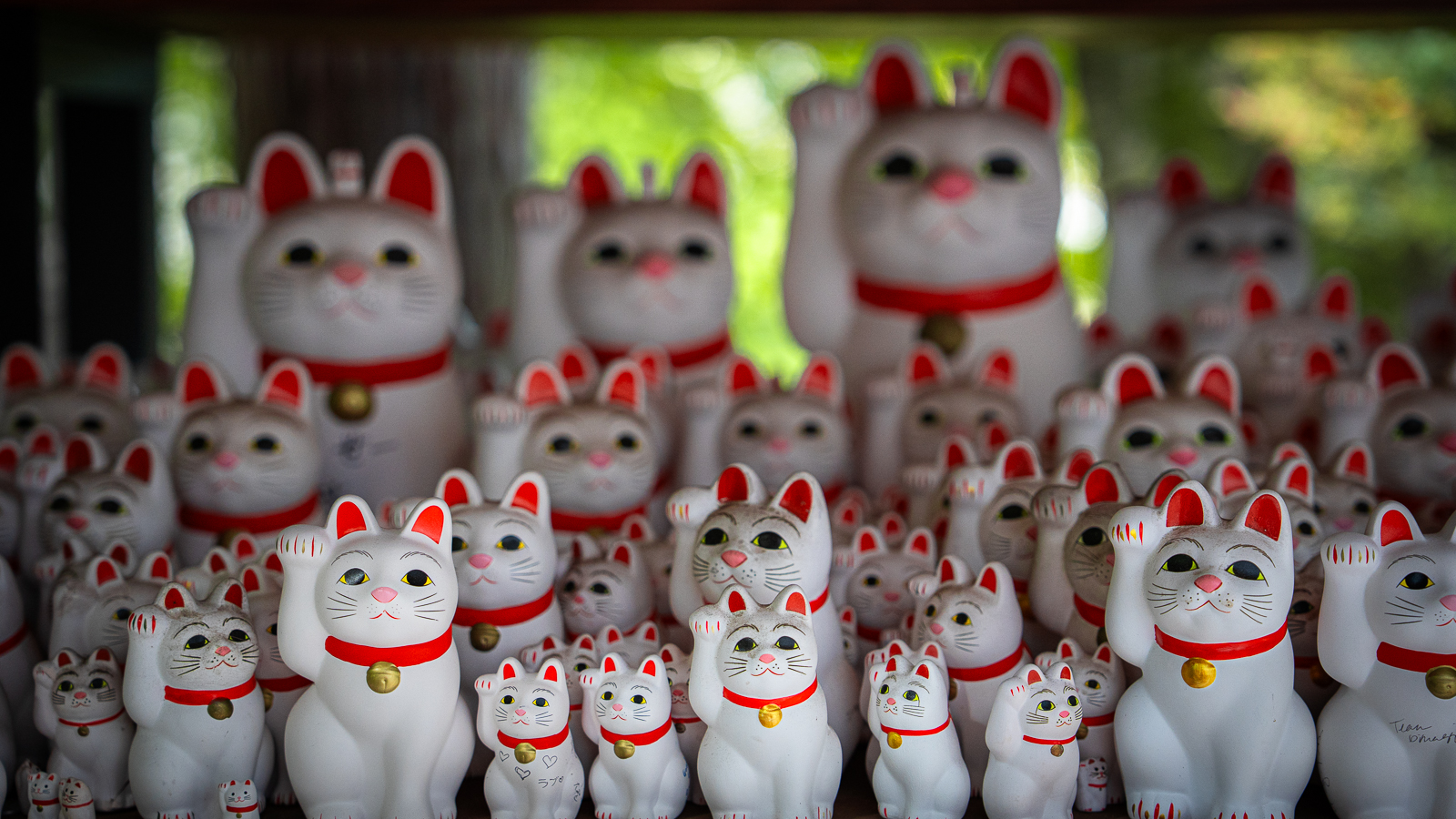
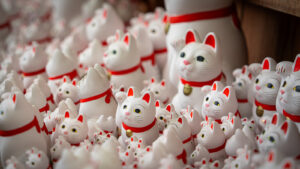
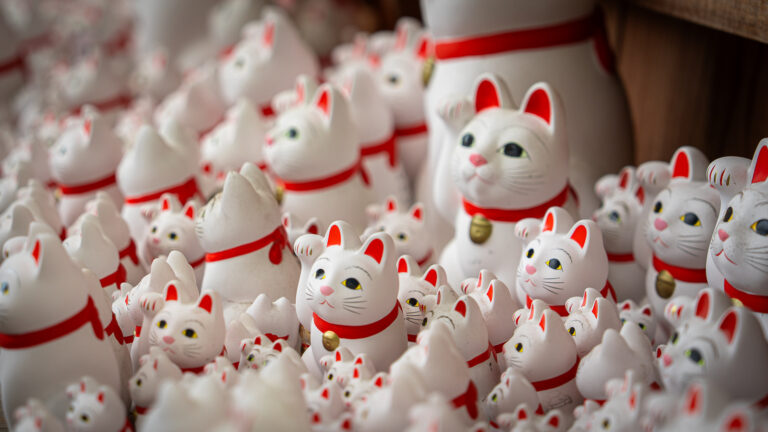
Gotokuji, often known as Tokyo’s “lucky cat temple,” is all over Instagram. That makes sense—thousands of small, white, little kitty cats lined up in neat rows, each with its cute, little raised paw, just waiting to be photographed. It’s travel Instagram gold.
If I’m honest, I went with the same thinking—to photograph the density, the excess, the visual repetition of it all. And, even though I’m a dog person, the fact that they’re adorable little cats didn’t hurt either.
But I was also curious to see what this place was really about, and it took some time to realize what I was actually looking at.
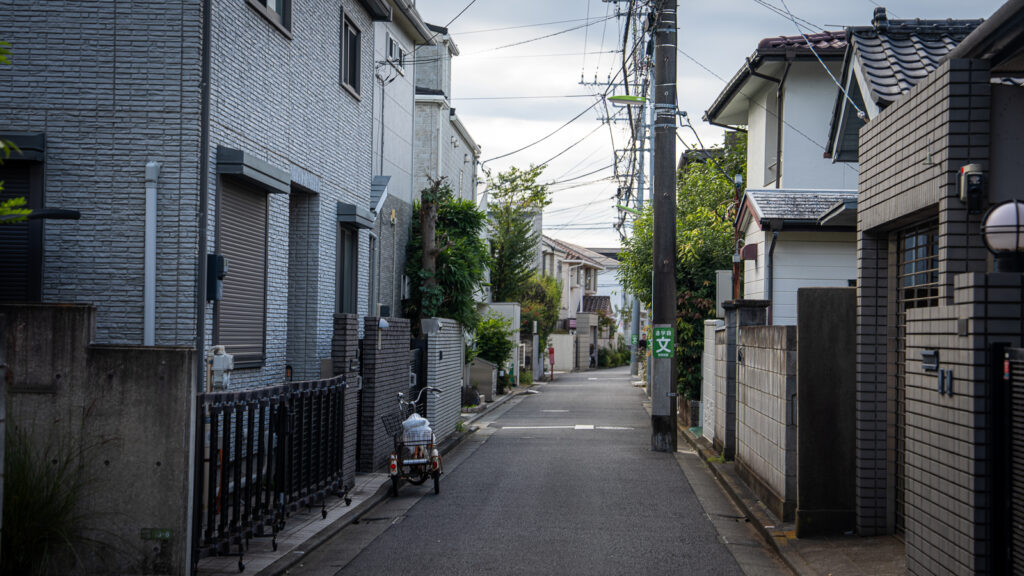 A quiet residential street near Gotokuji, far from central Tokyo’s crowds.
Gotokuji is in the Setagaya neighborhood, far from the business of central Tokyo, and when we visited first thing in the morning, felt like a respite from the crowds. We passed quietly through the gate and down a tree-lined path, passing worshippers lighting incense at the jōkōro—the large incense burner placed in front of the main hall. The smoke, the slow movements, and the muted rhythm made something immediately clear: this was a temple long before it was a tourist attraction.
The grounds span roughly 50,000 square meters and have been home to the temple since 1480, long before lucky cats entered the picture. In 1633, when the area became part of the Hikone domain, the temple was restored with the support of the local daimyo, Ii Naotaka. Since 1659, Gotokuji has been closely associated with the Ii family, whose tombs on the grounds are now designated a National Historic Site.
That’s nearly two centuries of history before the cats appear at all — and more than three and a half centuries before anyone thought to photograph them.
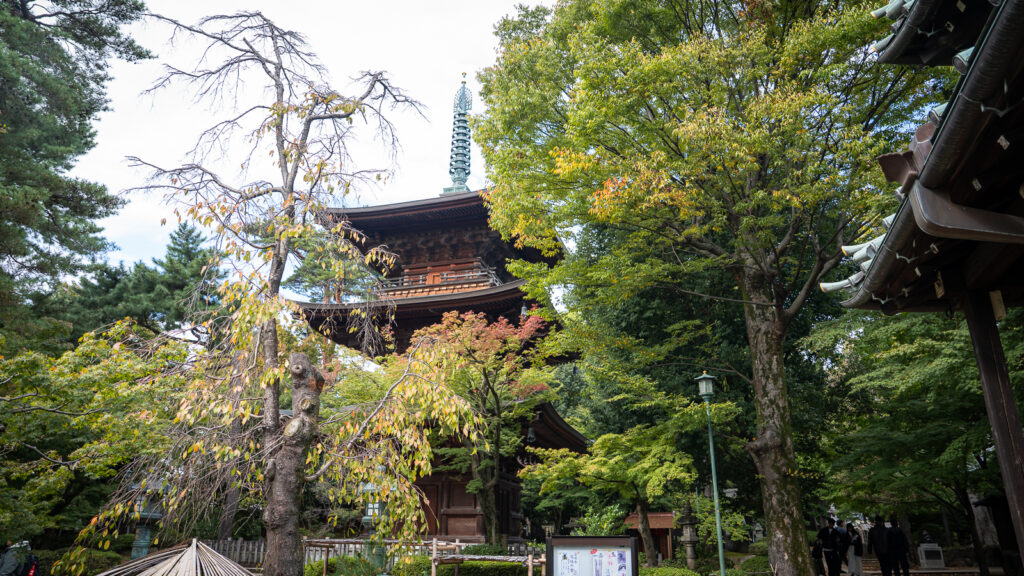 The pagoda appears gradually through the trees.
West of the incense burner stands a three-story pagoda that enshrines a relic of the Buddha, along with statues of Shakyamuni (another name for the Buddha), Kashyapa (a revered sage), Ananda (a principle disciple) and Maneki-neko (the beckoning cat). Beyond that lies the main hall, and it’s surrounding this building that you find shelves and shelves of lucky cats.
So why cats?
According to legend, Ii Naotaka was once caught in a sudden storm while hunting with his falcons. A cat named Tama, who belonged to the temple’s abbot, beckoned him inside just as a lightning bolt struck where he had been standing. Naotaka interpreted this as an act of protection and good fortune and became a patron of the temple.
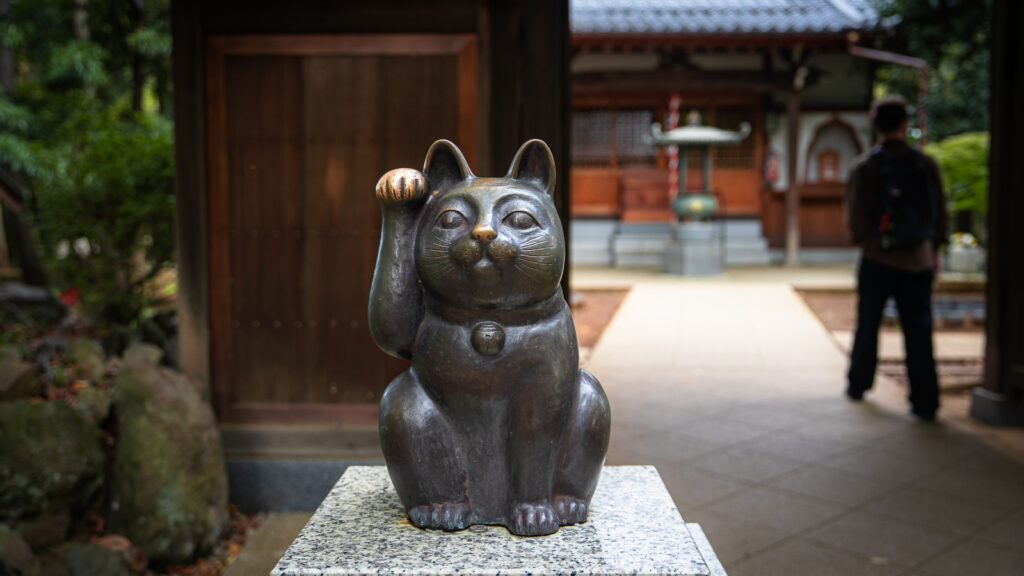 Wear marks reveal how often visitors reach out.
After Tama’s death, Gotokuji built the Shōfuku-den (main hall) to enshrine the cat believed to have brought such luck, naming it Maneki-neko—the beckoning cat. Since then, visitors have come to pray for health, prosperity, happiness, and success, leaving behind small cat figurines either to make a wish or to give thanks for a dream fulfilled.
Two things struck me during this visit.
The first was the sheer scale of time. The age of the temple is almost beyond comprehension—orders of magnitude older than my own country. When you place the temple’s founding, the emergence of the lucky cat legend, the arrival of travelers, and finally Instagram on the same timeline, it becomes clear how absurd it is that we’ve allowed our social platforms to feel so authoritative.
The second feeling was something close to “sonder”—the realization that every person you encounter is living a life as full and complex as your own. Standing in front of the shelves surrounding the main hall, that sensation was overwhelming. Each of the thousands of identical cats had been placed there for a different reason. Each represented a private hope, a moment of uncertainty, or gratitude. Someone came here and asked for something. Some waited and returned. Some may still be waiting.
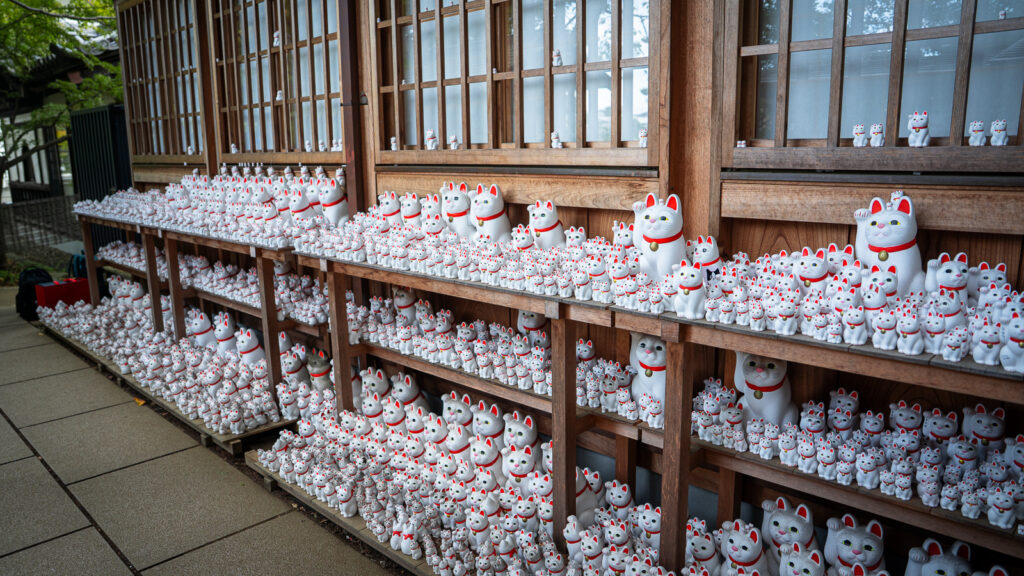 Scale becomes impossible to ignore.
What looks like visual excess at first glance, is, in fact, archive.
What looks like spectacle on a screen is a representation of real-life hopes and dreams.
This world is so much bigger than we are. Media has a way of collapsing time and distance, and often that’s a gift. But when we let it flatten history—or shrink the power of belief, ritual, and human intention—we lose something essential. Gotokuji asks for patience instead. It reminds us that meaning doesn’t always come with a grand entrance. Sometimes, it waits, repeating thousands of times, until we slow down enough to notice.
Want more like this?
This essay originally appeared on my SubStack. For more like this, subscribe for free here.
Naturalist’s Notebook

Follow the story
Spend time learning the legend of the cat that beckoned Ii Naotaka to safety, and his subsequent support that helped rebuild the temple in 1633. But instead of collecting the legend as trivia, look around for evidence of the Ii family’s continuing presence in the temple’s architecture, cemetery and history.
More than a souvenir
If you buy a cat, amulet or other keepsake, decide what you want it to remind you to do. Notice opportunities? Express gratitude? Pay attention to unexpected invitations? Let the souvenir become a prompt rather than proof that you were there.

Ask yourself
We translate maneki-neko into “lucky cat,” but what does luck mean to you? Is it something that’s bestowed upon you? Something you recognize? An opportunity that you seize? A relationship? Something requiring action? How does your visit impact your answer?