
📷 Decoding Ice
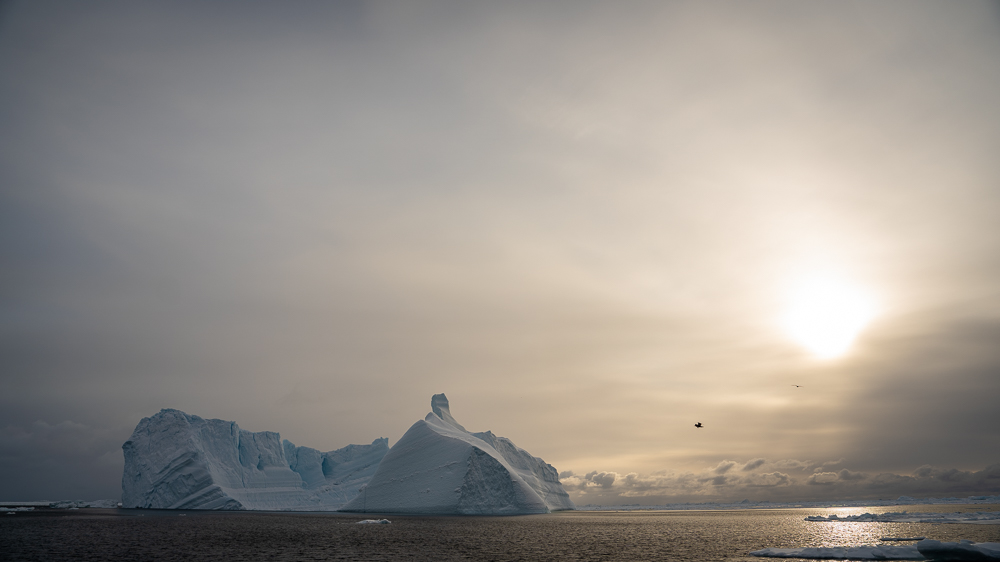
Ilulissat is known as the “City of Icebergs.” That’s because the Ilulissat Icefjord sits at the mouth of Sermeq Kujalleq, one just a few glaciers that connect the Greenland ice cap with the sea. This is one of the world’s fastest and most active glaciers; it produces more calved ice than any glacier outside of Antarctica!
But not all icebergs are created equal. In Greenland’s icy waters, each ‘berg carries clues to its age, origin, and makeup.
I took these photos while on an evening boat tour of the icebergs in Disko Bay. They were stunning, but I had no idea they could be so different from each other. And, it turns out, the differences tell stories not only about the iceberg’s makeup, but also its journey.
White Icebergs
White icebergs are young and full of air. Their pale color comes from countless trapped air bubbles and is proof that this ice is newly formed on the Greenland Ice Sheet.
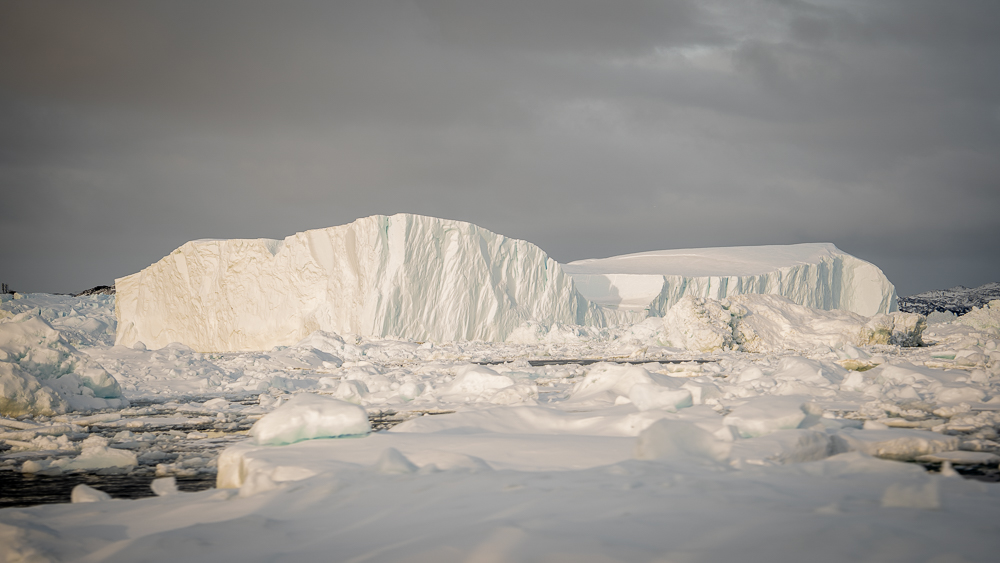 Soft light illuminates a pristine white iceberg.
Dirty Icebergs
Speckled with sand and mud, dirty ice indicates it spent time near land. These earthy fingerprints are likely soil picked up from nearby moraines.
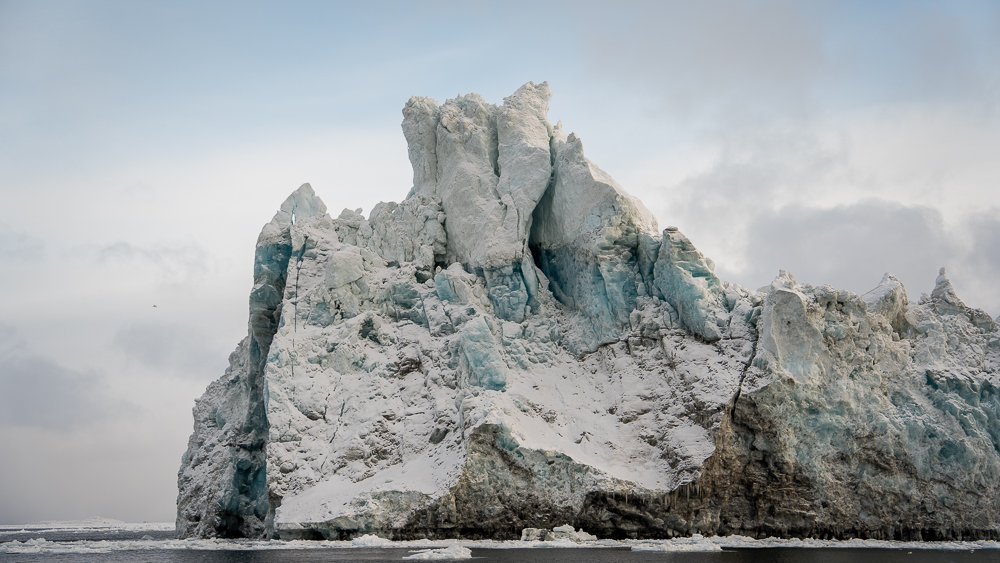 Color and texture shape a frozen mountain range.
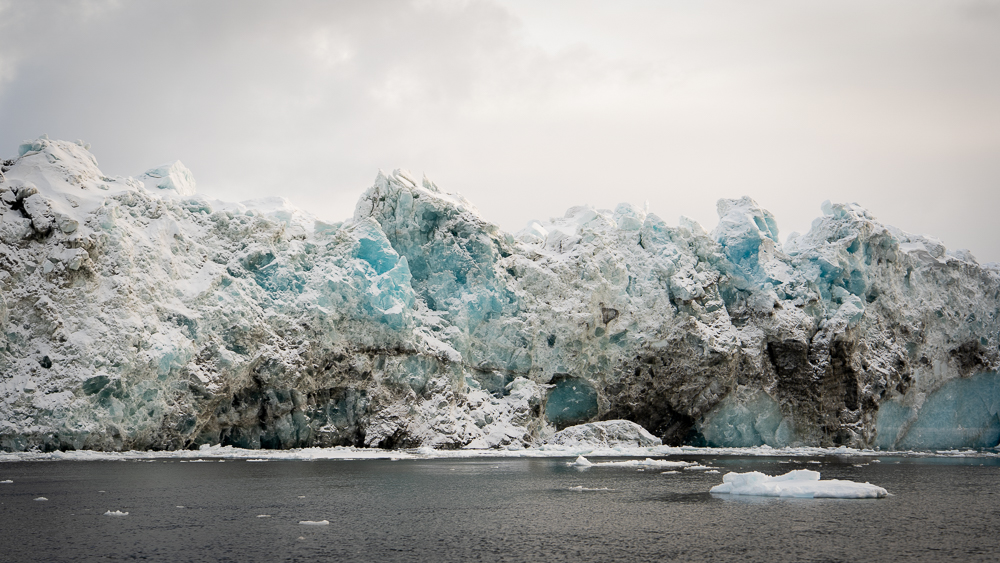 Layers of color reveal the iceberg’s long journey.
Blue Ice
Blue ice, seen in the stripe on this iceberg, is compressed over millennia. Its dense, bubble-free texture gives it a rich, deep blue tone and makes it heavy in the water.
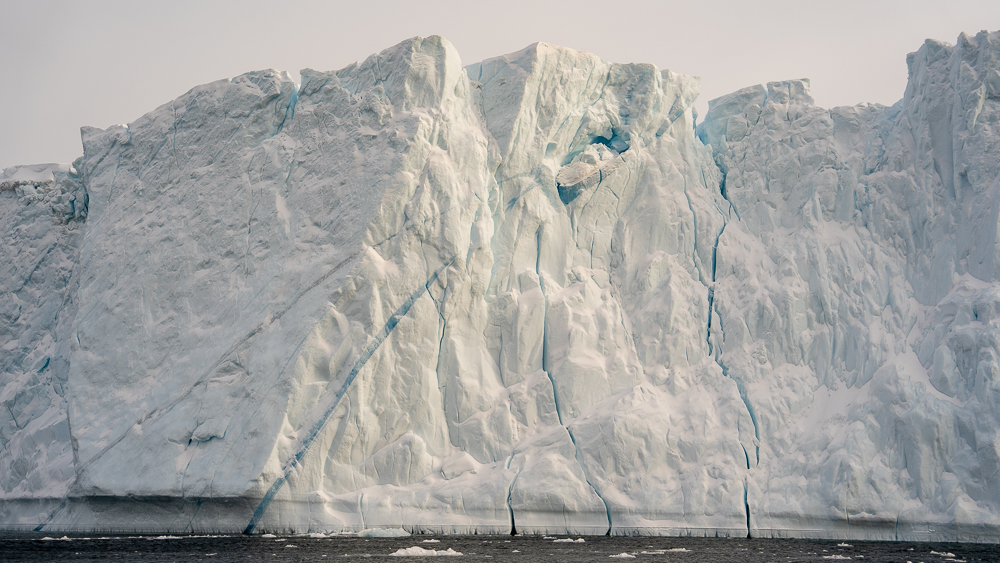 A bright blue seam cuts across the face of the iceberg.
Black Ice
As fearsome to sailors as it is to drivers, black ice is nearly invisible at sea. It is formed from frozen rainwater and freezes clear and glass-like (it only looks black when its in the water). It’s also heavy, making it something you don’t want to strike with your ship’s hull.
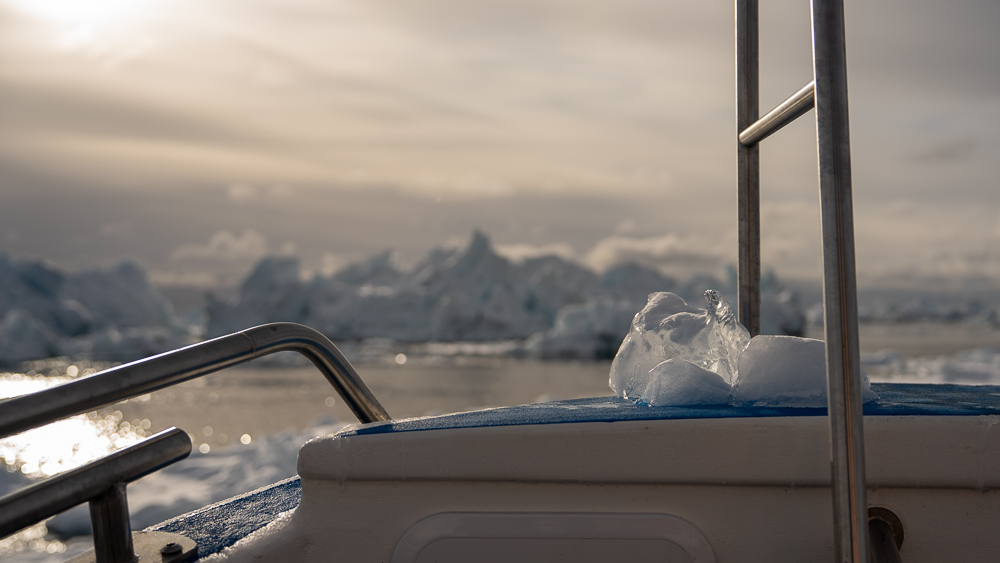 A piece of ancient black ice rests on the bow during an evening cruise.
Sea Ice
While most icebergs are fresh water, flat sheets of frozen seawater drift south from the Arctic, carrying traces of salt locked within. Unlike glacier ice, this type of ice forms directly from the freezing sea.
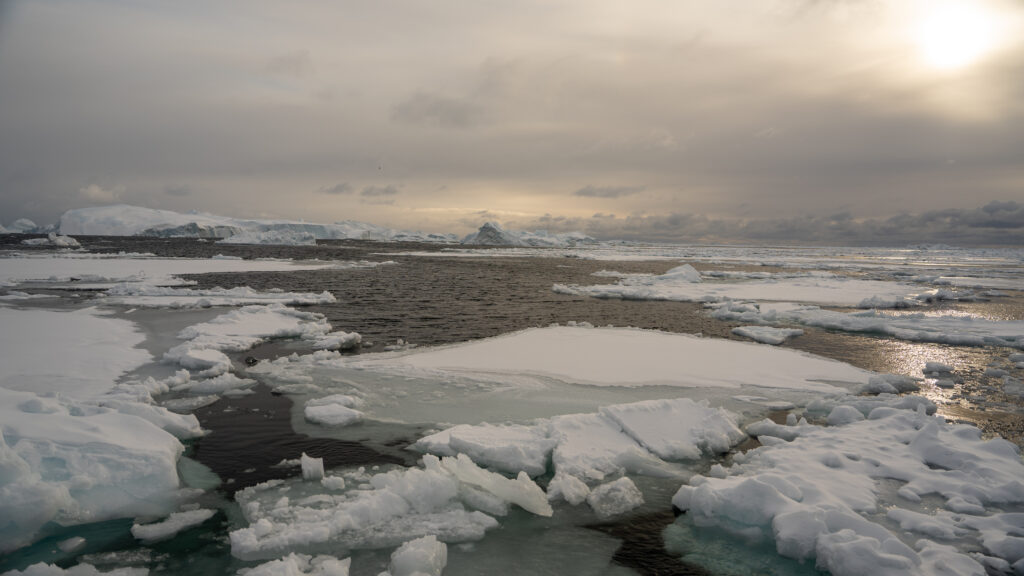 Sea ice stretches toward the horizon beneath the fading light of an Arctic sunset.
Naturalist’s Notebook

Draw an Iceberg
Choose one iceberg and sketch it for five minutes. Don’t worry about whether your drawing is “good” or not, just keep going. Add its ridges, cracks, colors, shadows and textures. When you’re finished, look at the iceberg again. What do you see now that you didn’t see five minutes ago?

Choose your words
How would you describe each of the icebergs without using the words ice, frozen, or cold?

Time scale
What is the oldest ice you see? What’s the youngest? How do you know?