📷 Where the Past Still Walks
In Shepherdstown, the past isn’t gone—it’s just waiting for nightfall.
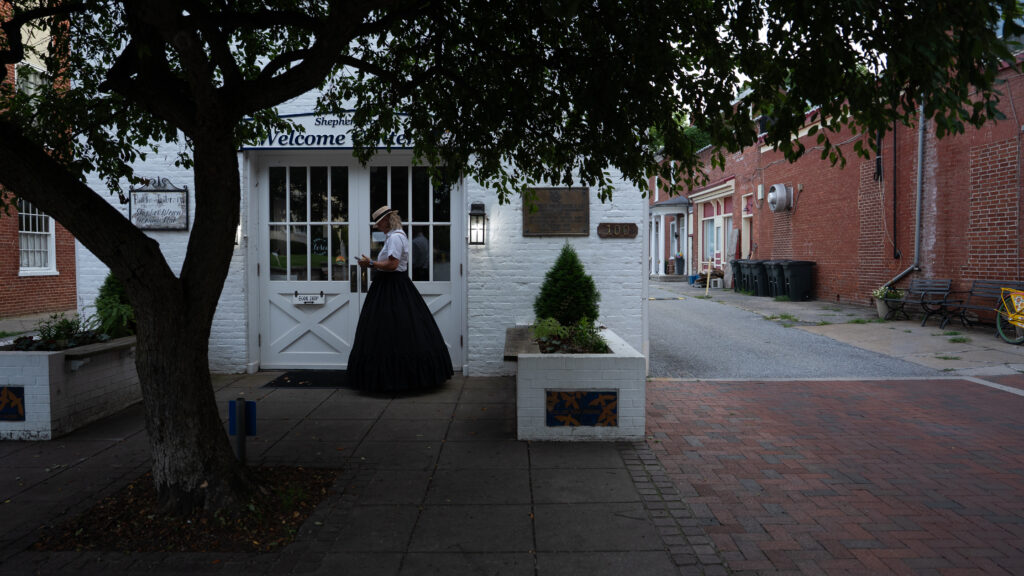
The Shepherdstown Mystery Walk ghost tour starts a little before sunset, when the shadows start to stretch and the brick street near the visitor’s center still holds the warmth of the day. In this small West Virginia town — settled in 1730, long before the United States even existed — the past feels close.
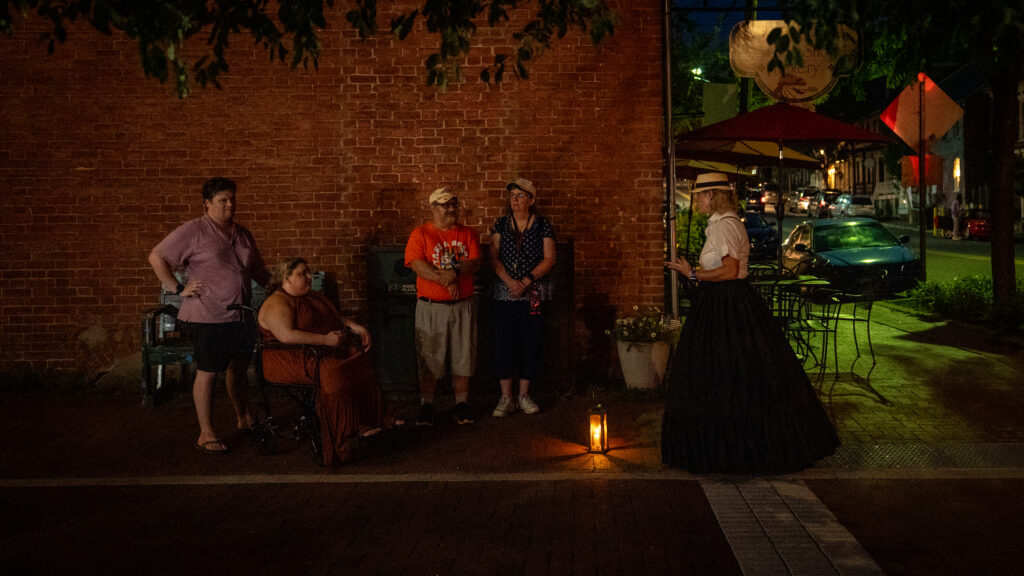
 Janet Hughes, host of Shepherdstown Mystery Walks, begins an evening walk near Shepherdstown’s old public library, leading guests through the history—and ghost stories—of West Virginia’s oldest town.
Shepherdstown is famous for its paranormal activity, and the cemeteries in the area hold a few clues about the souls inhabiting the area. But they can’t account for all those who died untimely deaths here — whether in the Revolutionary or Civil Wars, or sweeping outbreaks of cholera or Spanish flu — many of whom were not properly buried or whose remains were buried elsewhere.
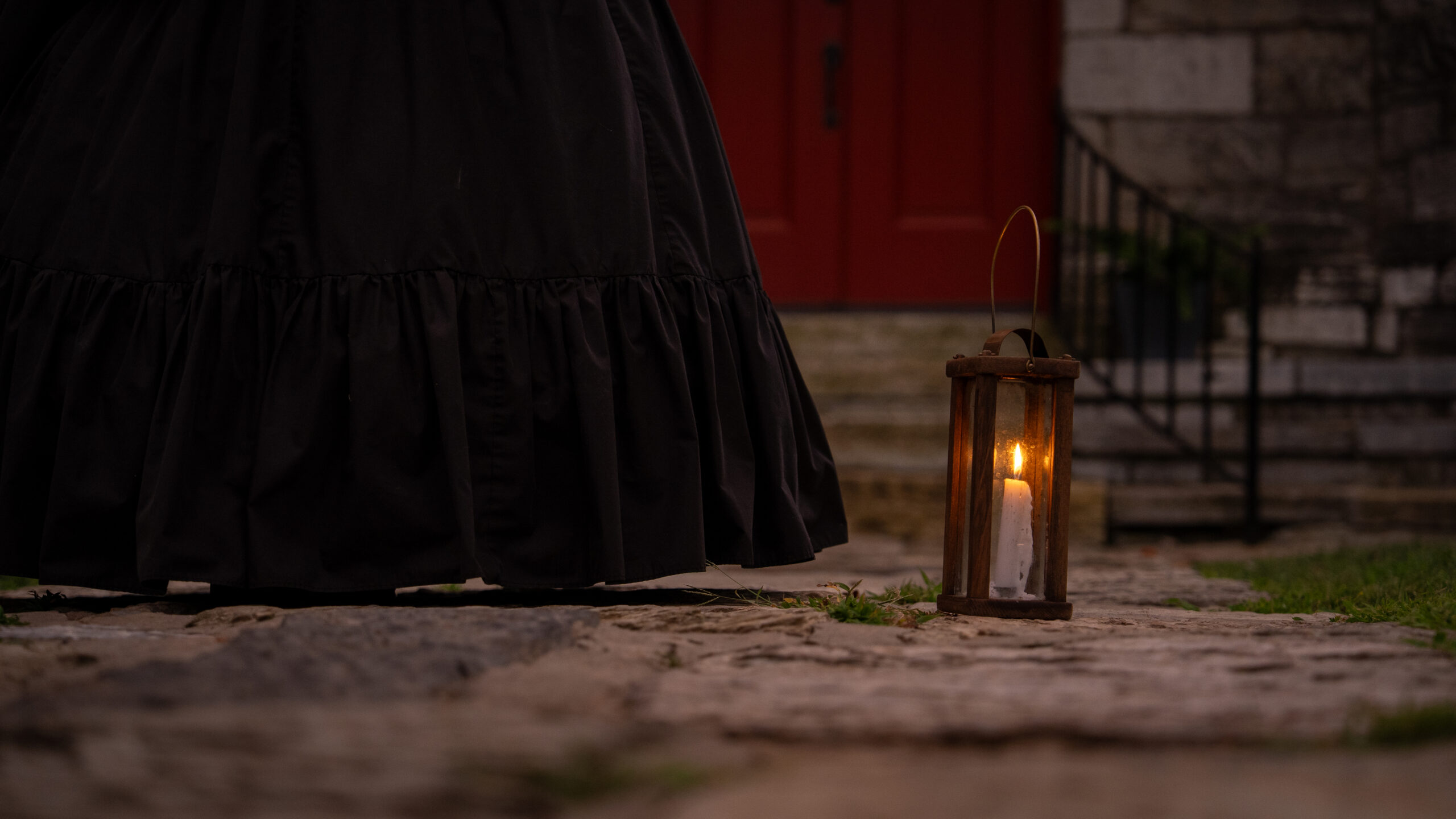
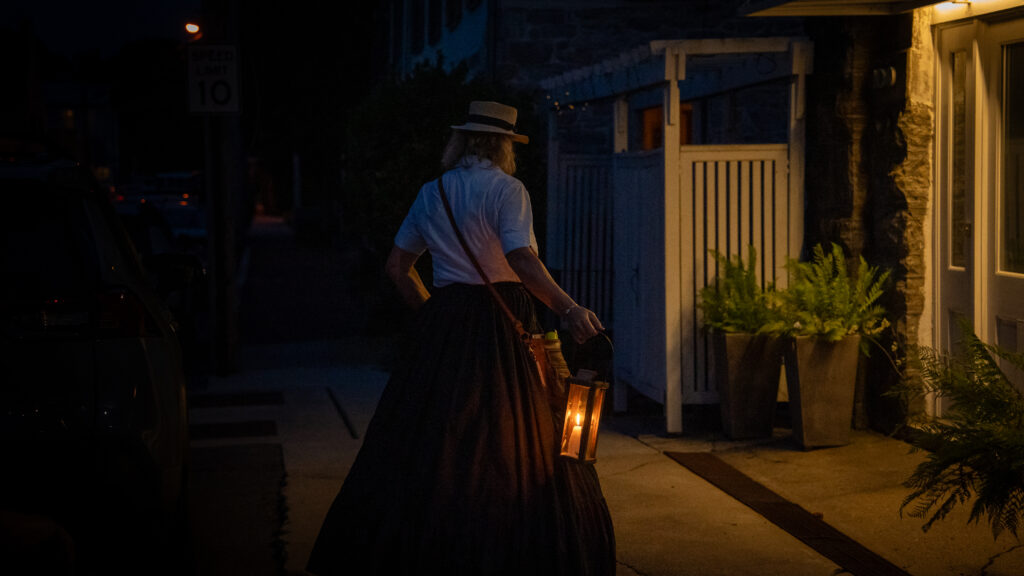
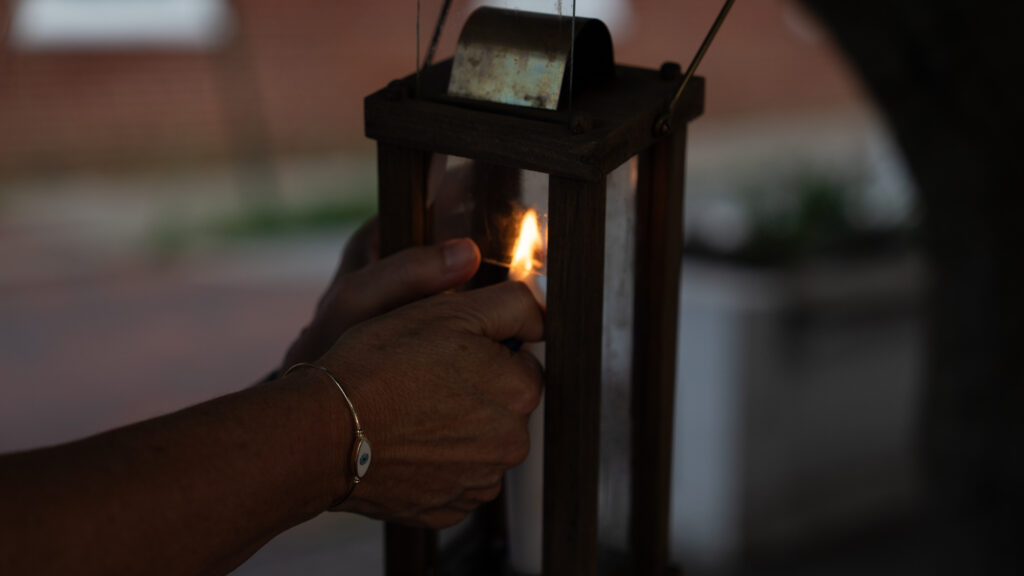 Before setting out through Shepherdstown, Janet Hughes lights the candle in the lantern that will accompany the group through the evening.
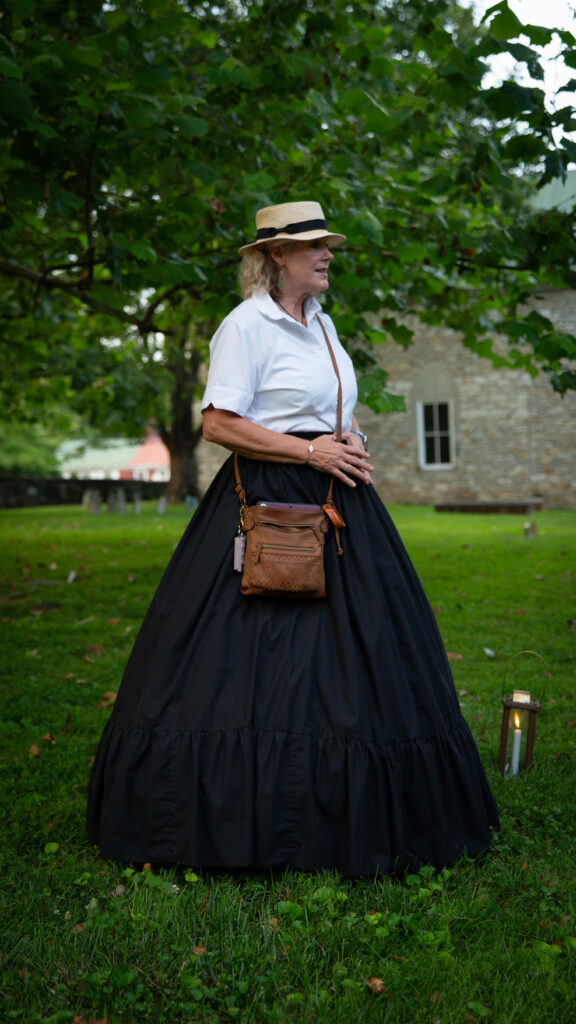 In one of Shepherdstown’s historic cemeteries, Hughes shares stories of the people buried here and the hauntings associated with the grounds.
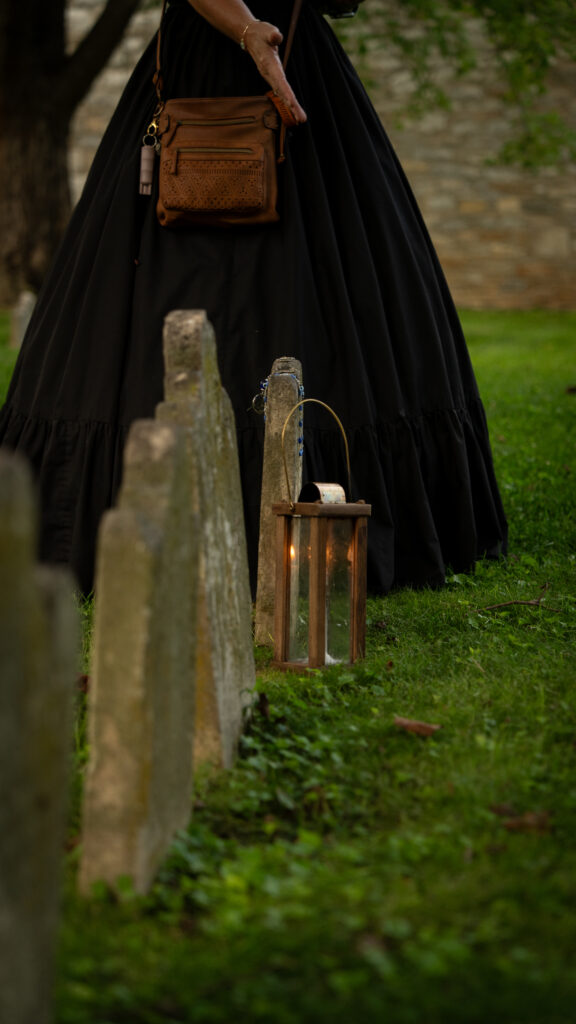 Headstones, lantern light, and the sweep of a black skirt set the scene as the evening walk moves through one of Shepherdstown’s historic cemeteries.
- The walk is as much about remembering the people behind the stories as recounting the supernatural. Hughes pauses to clear debris from one of the cemetery’s old headstones.
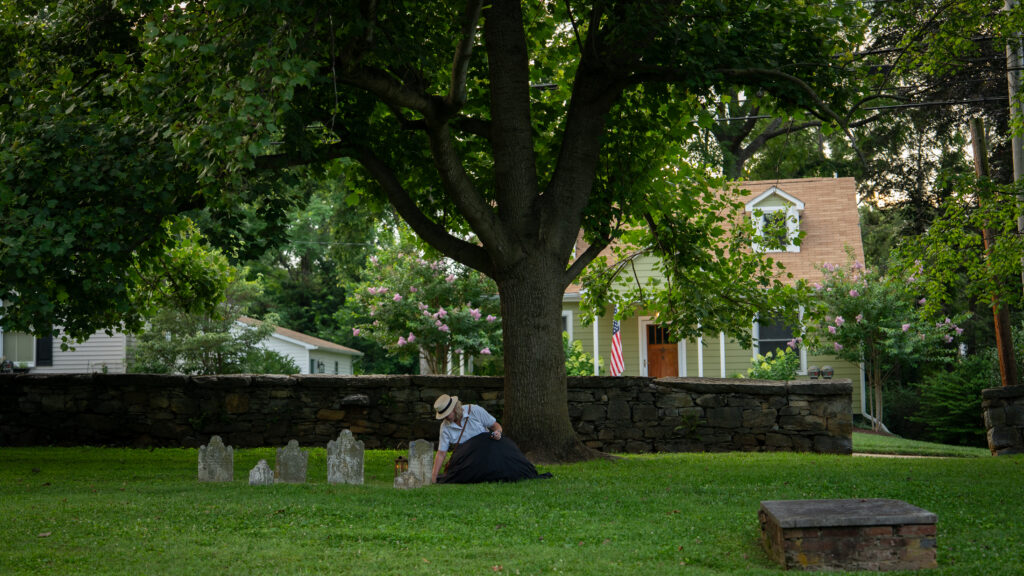
- Between the headstones, Hughes shows guests photographs offered as evidence of some of the spirits reported around Shepherdstown.
- A lantern beside the grave of Conner, who died at age 10 and was buried here without his parents. His story is one of the individual lives remembered along the walk.
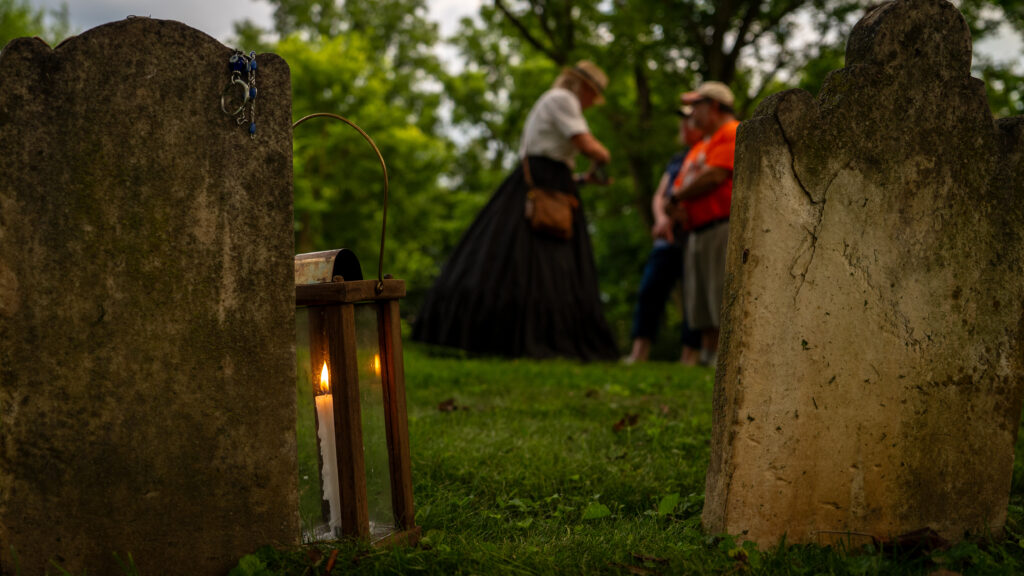
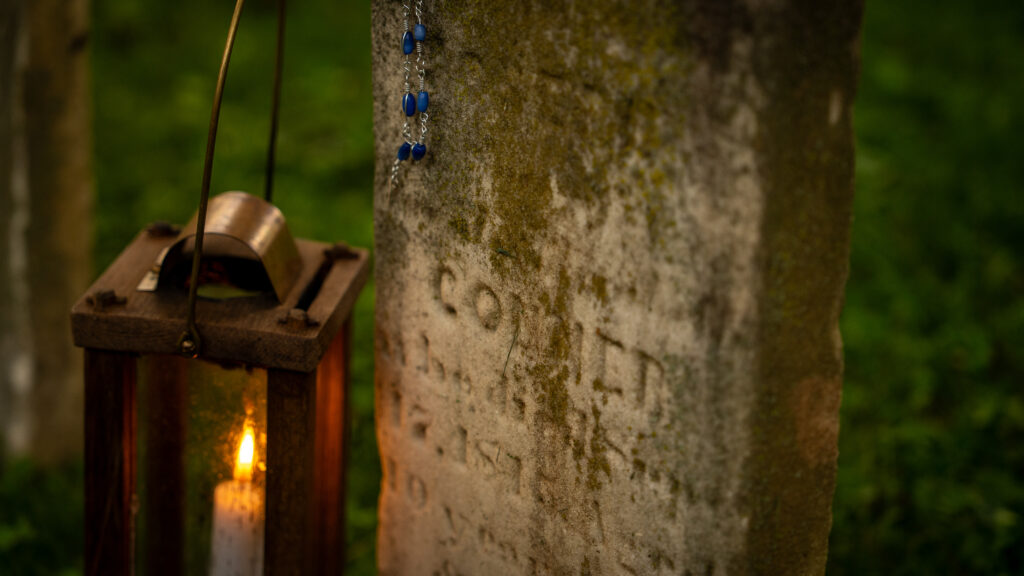
Just across the Potomac River lies Antietam, where the bloodiest battle of the Civil War left more than 22,000 dead. Its proximity to such loss gave Shepherdstown a new identity: homes became hospitals, churches became morgues, and the line between the living and the dead blurred.
- As daylight fades, the group follows Hughes and the glow of her lantern deeper into Shepherdstown’s stories.
- A lantern burns in the foreground as the group gathers to hear another of the stories that have attached themselves to Shepherdstown over generations.
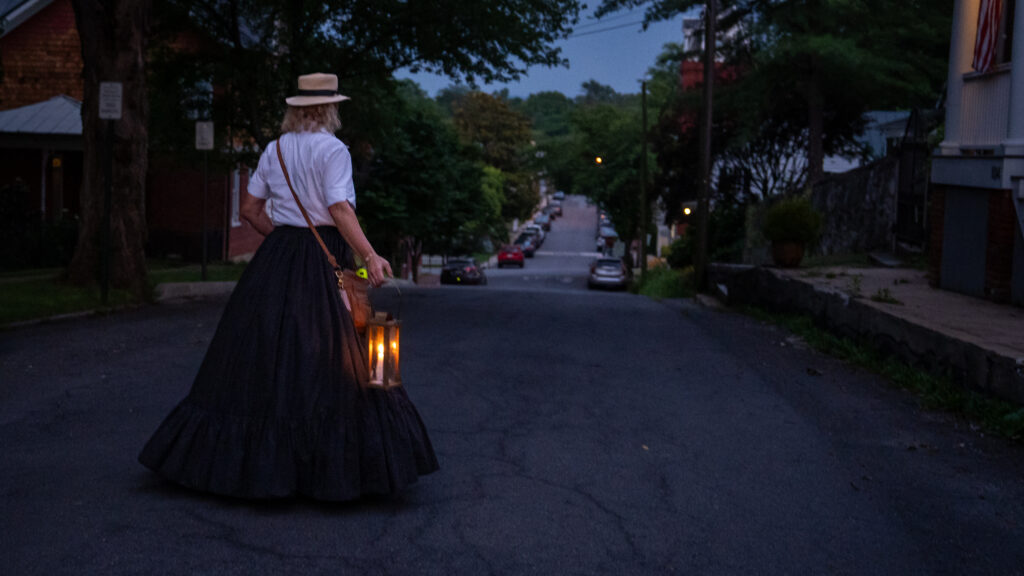
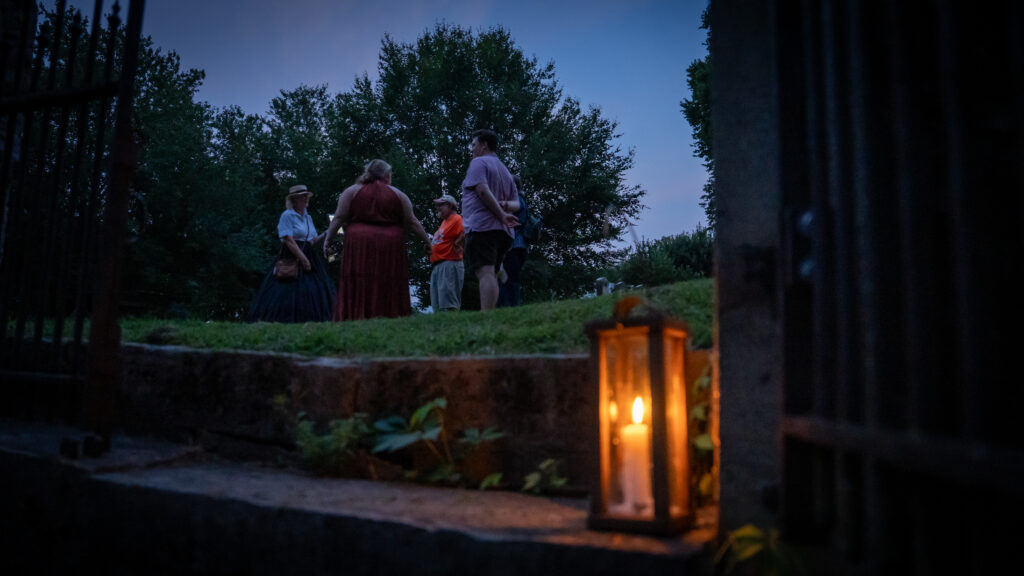
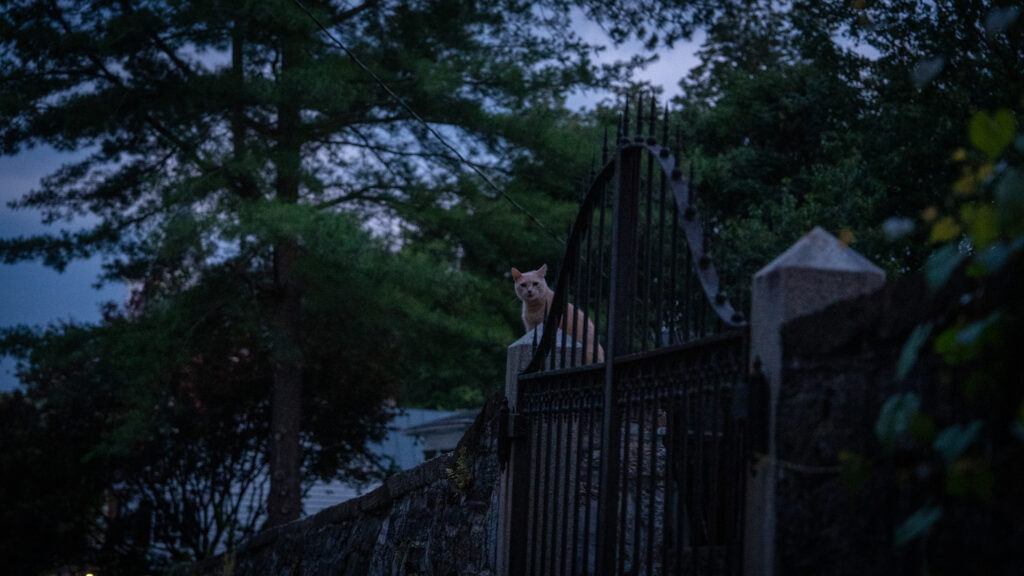
- Cecil, an unofficial mascot of the walk, keeps watch from a stone gate. The property beyond is connected to the enormous effort to feed wounded soldiers and medical staff brought to Shepherdstown after the Battle of Antietam.
- As darkness settles in, the walk passes a building once associated with Irish immigrants who came to work on the railroad. Many died during a cholera outbreak—another layer of loss in Shepherdstown’s history.
Places like Shepherdstown are a reminder that stories aren’t only told in words, they’re embedded in the land itself. Every street, every corner, is part of an ongoing narrative. We have to listen for those voices and understand that history isn’t something we leave behind—it’s something we walk through every day.
- The walk ends at the Shepherdstown Sweet Shop, in a building that, like many in town, was pressed into service as a makeshift hospital after the Battle of Antietam.
Naturalist’s Notebook

Look for layers of time
Where do different eras occupy the same view—a revolutionary war headstone, near a civil war-era building, beside a modern storefront? Through all those eras, who gets remembered on buildings, plaques and headstones? Who survives instead through stories?

Ask
Instead of asking only Did this really happen?, ask Why has this story endured? Sometimes what a community continues to tell is interesting regardless of whether every detail can be verified.
Walk the same street twice
Try to spend some time walking around the town before the tour. Then pay attention to how stories change a place. Does a quiet street feel different after you hear what happened there? Listen for the details a storyteller emphasizes, the stories that have been repeated for generations, and the moments when history slips into folklore.